Scotts, Spruce, and the Trade-Dress Whipsaw
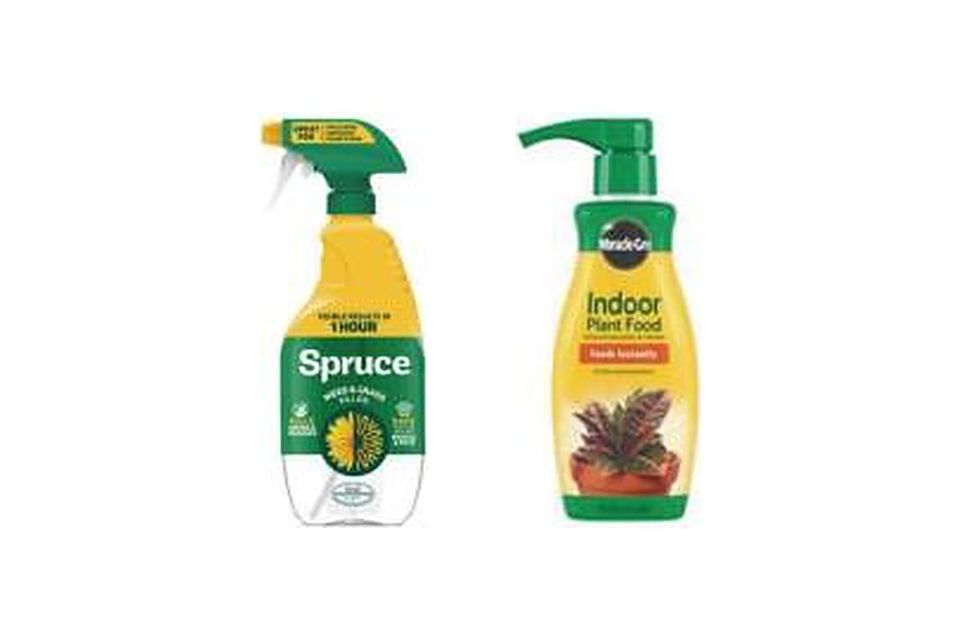
On June 4, the Sixth Circuit told The Scotts Company two things about its Miracle-Gro packaging. First: there is nothing particularly special about green and yellow in the lawn-care aisle. Second: Procter & Gamble’s Spruce weed killer looks nothing like it anyway. How can both be true? Read on.
Scotts Co. v. Procter & Gamble Co. was a hometown brawl: Scotts of Marysville sued P&G of Cincinnati in the Southern District of Ohio within weeks of Spruce’s November 2024 launch, seeking a preliminary injunction for trade-dress infringement and dilution. District Judge Douglas R. Cole denied it on every factor; Judge Boggs, joined by Judges Batchelder and Moore, affirmed.
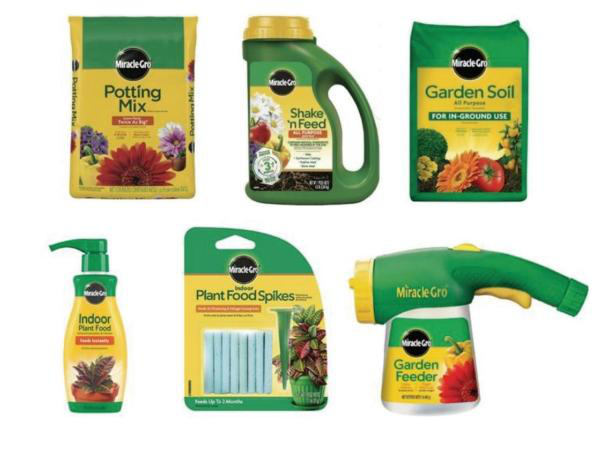
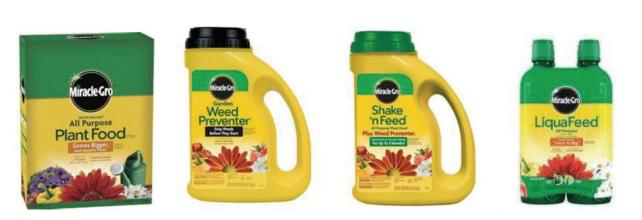
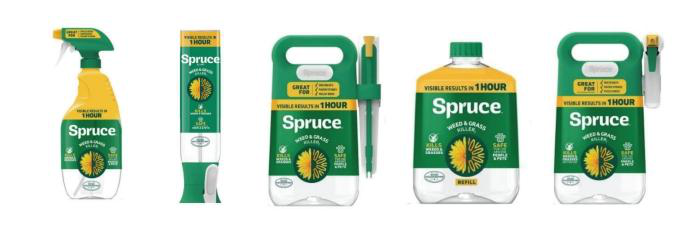
The Miracle-Gro dress, as Scotts itself defines it, is specific: roughly one-third green over two-thirds yellow, a circular graphic centered on the package. The Spruce bottles run deep green over a see-through base, with yellow accents and a dandelion badge. Between them: a crowded shelf — Preen, Spectracide, Sunday, and more — all in green and yellow, some shelved right next to Miracle-Gro.
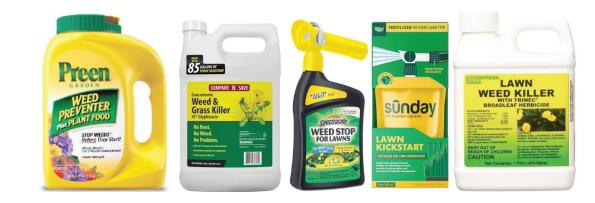
The whipsaw
The apparent tension in the court’s decision dissolves once you see the two definitions of dress at play in the case.
Defined broadly as green-and-yellow lawn packaging, the dress is conceptually weak: nothing distinct about those colors in this industry, and extensive third-party use keeps them from pointing to a single source.
Defined narrowly as the registered one-third/two-thirds ratio, the two bands, and the circular graphic, the dress is at least arguably distinctive. But measured against that definition, Spruce’s deep-green, clear-bottomed bottles are “highly dissimilar,” using the district court’s words, which the panel adopted. That sinks the similarity factor. And the dilution claim goes down with it because similarity is “the necessary predicate” for dilution.
Broad enough to catch P&G, the dress is too common to protect; narrow enough to be distinctive, P&G doesn’t come near it. You cannot stretch the right to reach the defendant without stretching it past the shelf. Or as the panel put it: “Scotts can’t have its cake and eat it too; either the yellow-and-green combination is distinct from the many other green and yellow products on the market because of its specific ratio, or it isn’t nearly as distinct as Scotts claims.”
Thirty-one moving parts, one conclusion
The legal framework here involved a dizzying number of factors. Four from the preliminary-injunction standard; three trade-dress elements, Abercrombie & Fitch Stores, Inc. v. Am. Eagle Outfitters, Inc., 280 F.3d 619, 629 (6th Cir. 2002); eight likelihood-of-confusion factors, Frisch’s Rests., Inc. v. Elby’s Big Boy of Steubenville, Inc., 670 F.2d 642, 648 (6th Cir. 1982); a two-axis interplay of conceptual and commercial strength, Kibler v. Hall, 843 F.3d 1068, 1073 (6th Cir. 2016); five federal-dilution elements, Autozone, Inc. v. Tandy Corp., 373 F.3d 786, 802 (6th Cir. 2004); three relatedness categories, Homeowners Grp., Inc. v. Home Mktg. Specialists, 931 F.2d 1100, 1108 (6th Cir. 1991); and six statutory blurring factors, 15 U.S.C. § 1125(c)(2)(B).
By my count: 4+3+8+2+5+3+6 = thirty-one moving parts in seven nested frameworks. (!!)
Did all those factors really decide the case? Maybe. Maybe not. Maybe, at day’s end, it all just boiled down to a good dose of common sense. I mean, really — just look at the dang bottles.
P.S. Shoutout to my friend, the dazzlingly talented Lauren Kuley, who argued and won the appeal for P&G.