Lloyd’s of London, Burned Monets, and the Jurisdictional Problem Nobody Raised

Most insurance-coverage appeals turn on what the policy says. This one turned on whether the federal courthouse had any business reading the policy at all. The Sixth Circuit’s answer in Halbower v. Hiscox Syndicate 33 of Lloyd’s of London, No. 25-1152 (6th Cir. May 29, 2026), was: not yet, and not on this record.
The (expensive) facts
In June 2022, a fire near Pentwater, Michigan destroyed a house and, with it, five paintings held by the Halbower Legacy Trust. The opinion refers to the works by the pseudonyms used on their insurance records — the Cliff, the Path, the Castle, the Prairie, and the River — but Judge Readler cannot quite resist the detective work, deducing from the record that three were likely Monets and one a Picabia. The River, not listed on any insurance schedule, “remains subject to speculation.” (One imagines the panel would have enjoyed knowing.) Readers of the opinion were even treated to a picture of the Prairie, so, following the Court’s lead, enjoy some eye candy:

The Halbowers had insured the collection through the Lloyd’s of London marketplace on a policy with a $100 million limit, underwritten by Hiscox Syndicate 33. After the fire, Hiscox paid $31,333,315 for three of the paintings — $15 million for the Cliff, $16 million for the Path, and a comparatively thrifty $333,315 for the Castle — but denied coverage for the Prairie and the River, which it said were not on the schedule held by the Lloyd’s Broker. Julie Halbower, as trustee, sued in Michigan state court for breach of contract and declaratory judgment. Hiscox removed to federal court, where the district court dismissed the case on the merits.
On appeal, the parties initially relitigated the merits, only for the panel to raise on its own (as it was obligated to) a question about diversity jurisdiction: was there any? The panel ordered the parties to file supplemental briefs addressing the issue, which they did.
Unsurprisingly for a case involving a handful of Monets, nobody was losing sleep over 28 U.S.C. § 1332(a)’s $75,000 amount-in-controversy threshold. It was the other requirement — diversity of citizenship — that proved trickier.
The short history of a coffee house
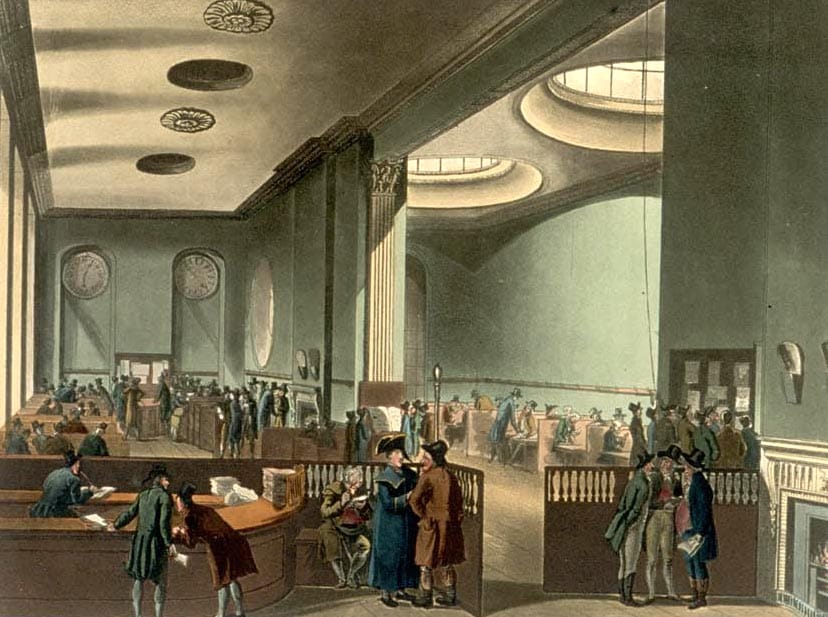
To explain why, the Court offered a short (but fascinating) history of the peculiar (and peculiarly) British institution that is Lloyd’s. In the mid-17th century, around the time coffee arrived in England, an entrepreneur named Edward Lloyd opened a coffee house near the Thames. Lloyd happened to be a connoisseur of shipping intelligence, and his cafe became the place where merchants gathered to trade information and to underwrite — to take on, for a fee, the financial risk of someone else’s voyage. The “Society of Underwriters at Lloyd’s Coffee House” eventually became Lloyd’s of London, today a marketplace handling some £46 billion in premiums a year.
The key point, for jurisdictional purposes, is that Lloyd’s is not an insurance company, though you’d be forgiven for assuming otherwise. It is a marketplace. The actual risk is borne by “Syndicates,” which are not corporations, not partnerships, and have no legal personality of their own. A Syndicate is just an administrative arrangement among its members — called “Names” (oddly) — who can be individuals or corporate bodies and who each carry only their own several share of the liability. A single Syndicate can have one Name or, the court notes, “sometimes over a thousand.”
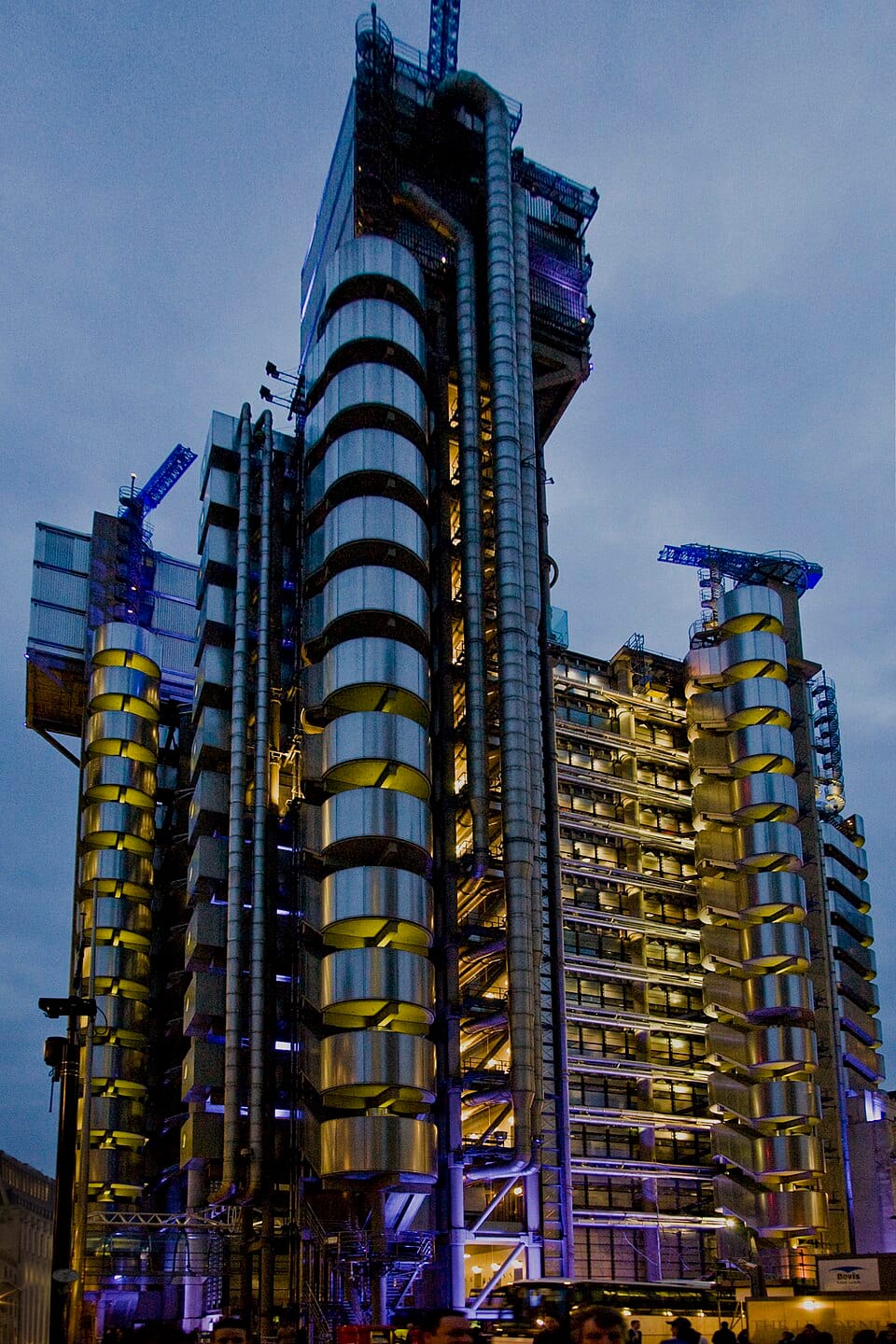

That structure is the heart of the case, and it’s hard to think of another entity less interested in fitting neatly into American diversity jurisdiction. (Should we be surprised it hails from the land of our former colonial oppressors?)
One reason a thousand Names is a problem
As a general matter, diversity jurisdiction requires complete diversity: every plaintiff must be of different citizenship from every defendant. Strawbridge v. Curtiss, 7 U.S. (3 Cranch) 267 (1806). The trustee, Julie Halbower, was a citizen of New Hampshire, and a trust takes its citizenship from its trustee — so the plaintiff’s side was a cinch.
The defendant’s side was not. Hiscox is, functionally, an unincorporated association. And the Supreme Court has a bright-line rule for those: an unincorporated association is a citizen of every state of which any of its members is a citizen. Carden v. Arkoma Associates, 494 U.S. 185 (1990). Apply that to a Lloyd’s Syndicate and you get a striking result: Hiscox’s citizenship depends on the citizenship of each and every one of its underwriting Names — potentially more than a thousand of them. If even one Name turns out to be a citizen of New Hampshire, complete diversity is destroyed and the federal courts are out.
The district court had looked only to the citizenship of the Syndicate’s managing agent, HSL, an English company. That, the Sixth Circuit held, was error. In line with the Second, Seventh, and Eleventh Circuits, the court held that Hiscox’s citizenship must be traced through every underwriting Name behind the Syndicate — and remanded for that counting to be done at the district court.
The Layne wrinkle
Hiscox’s best argument for a different outcome was based on a 1994 Sixth Circuit decision, Certain Interested Underwriters v. Layne, which it read to mean that only the managing agent’s citizenship counts. The majority disagreed, distinguishing Layne as a creature of its unusual facts: there, no Syndicate was listed on the policy at all, only “Certain Interested Underwriters” who appeared before the court as active underwriters, said they were liable on the contract, and had written the insurance, processed the claim, and been authorized to sue on the policy. Layne, the majority explained, simply never answered the question this case presents — how to assess the citizenship of a Syndicate that is named and sued.
Judge Bush, concurring only in the judgment, would have gotten to the same destination by a different road — applying Layne’s real-party-in-interest framework through Michigan agency law. Under his view, the Syndicate and its underwriting agent have a principal-agent relationship; because the Names behind Hiscox were not disclosed, Hiscox was the undisclosed principal. And because the plaintiff chose to sue Hiscox rather than HSL, the agent, Hiscox was the real party in interest whose citizenship had to be determined.
Judge Bush also noted a practical concern he has with the majority’s view: agency law varies state to state, and skipping it could, in another case, change the outcome. But, to the majority, that concern cut the other way: the majority was “skeptical of the idea that an approach so dependent on a given state’s agency law is the appropriate way to fashion a jurisdictional rule for this bespoke British institution and its Syndicates.” (Surely I wasn’t alone in dreaming, for a moment, of owning a bespoke suit from Savile Row after reading that sentence.)
The takeaway for practitioners
For anyone litigating in the Sixth Circuit, if you sue a Lloyd’s syndicate, remember that you can’t establish diversity by simply pointing to the managing agent. The citizenship inquiry runs through the underwriting Names. Complete diversity means a single Name sharing your client’s citizenship can defeat jurisdiction, so run the issue to ground before briefing the merits. Expect jurisdictional discovery, and build time for it into the case.
There is a tidy irony in all of this. The case began as a fight over whether two paintings were on a list. It ends, for now, with the Sixth Circuit ordering a different list — of the names behind the Names — before anyone gets to arguing about the art.